
Starship: The Biggest Step Yet Toward Reusable Deep-Space Flight
Starship reached orbit for the first time and deployed 26 Starlink V3 satellites.
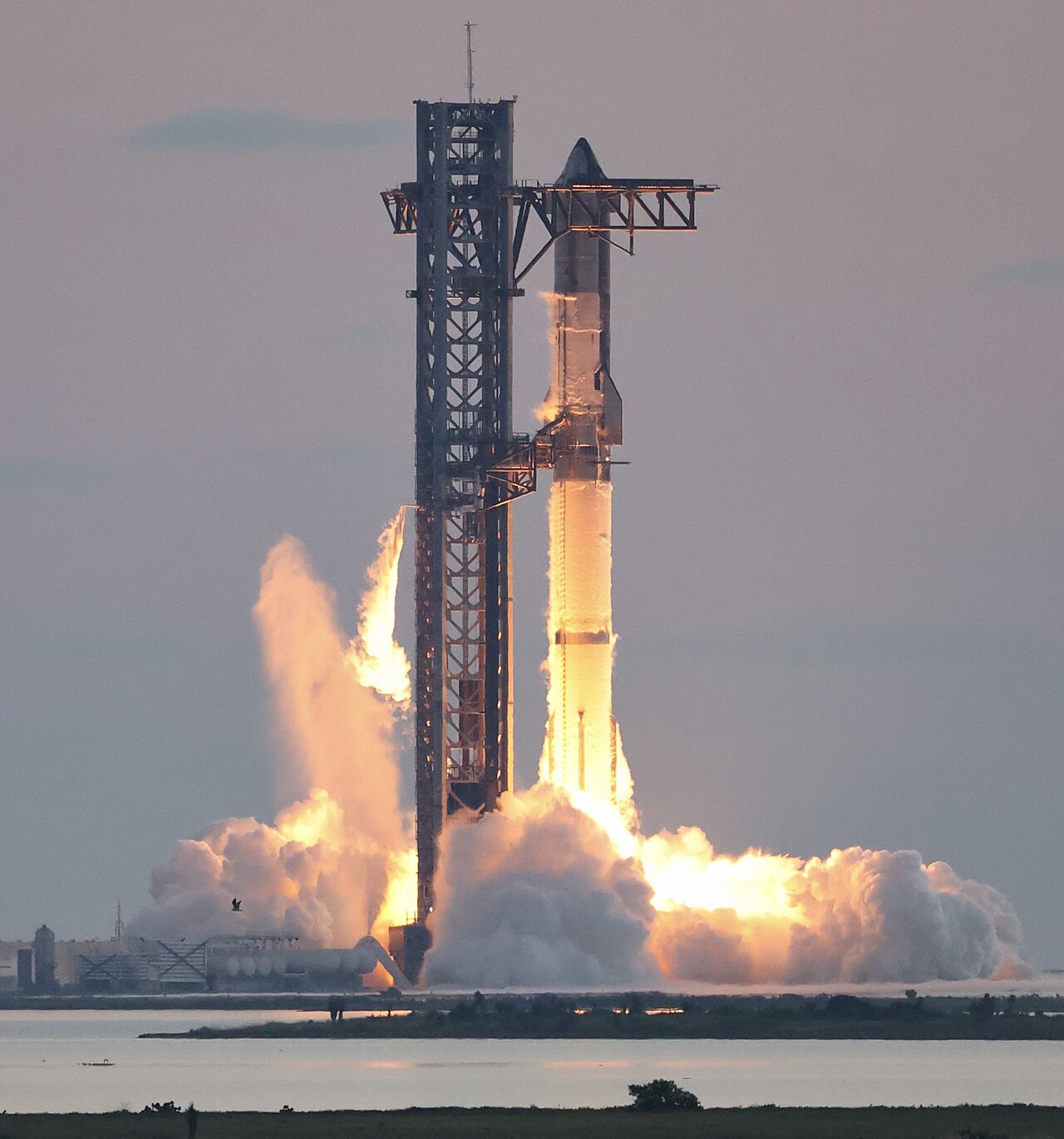
Orbit, At Last: Starship Clears Its Biggest Hurdle Yet
After three and a half years of test flights, SpaceX's super-heavy rocket finally circled the planet, and it brought paying cargo along.
Starship first left the launch pad in April 2023. Every flight after that was suborbital: up, over, and back down. On the morning of Monday, September 28, 2026, Flight 14 broke that pattern.
A launch with real weight behind it The 33 Raptor engines on the Super Heavy booster pushed out roughly 18 million pounds of thrust. The upper stage settled into orbit about 170 miles above Earth. Minutes later, it began releasing satellites, and the whole deployment took around half an hour.
Not dummies this time Back in July, Flight 13 carried 20 Starlink V3 satellites on a path that never reached orbit, and they burned up within minutes. Flight 14 put 26 of them into orbit for real. Each one unfolds to roughly the size of a Boeing 737 airliner. Each adds about 1 terabit per second of download capacity, ten times its predecessor, with uplink capacity jumping about 22 times. Three of them even carried cameras to photograph Starship's own heat shield from orbit.
A shorter trip than planned SpaceX had mapped out a flight of nearly ten hours. Instead, the team brought the ship down to a pre-cleared zone in the Pacific after about three hours in orbit. The headline milestone stands, but a full-duration flight is still on the to-do list.
The puzzle still unsolved Reaching orbit unlocks the next challenge: topping up fuel in space. A Mars-bound Starship would wait in orbit while tanker ships pump in liquid methane and liquid oxygen. It's an operation never done at this scale, and the Moon and Mars plans depend on it.
NASA's Artemis astronauts are also counting on a lunar version of Starship to carry them to the Moon's surface. Mars has a stricter clock: the planets align for an efficient trip roughly every 26 months, and the next opening arrives in late 2028.
From five a year to hundreds Starbase has never hosted more than five Starship launches in a single year, and only three have flown from there so far in 2026. Yet SpaceX has asked the FAA to raise its limit in two steps: first to 100 launches a year, then to 456. Because both stages are meant to fly back, the request also covers up to 912 landings a year. Florida is in the picture too: Launch Complex 39A at Kennedy Space Center has already been cleared for up to 44 Starship launches annually.
What comes next Elon Musk has spoken of growing Starlink to as many as 100,000 V3 satellites, a goal only a rocket like Starship could serve. The next test is clear: fly the full mission, then repeat it quickly and cheaply. Reaching orbit made Starship a spacecraft. Flying it like an airliner would make it a revolution.